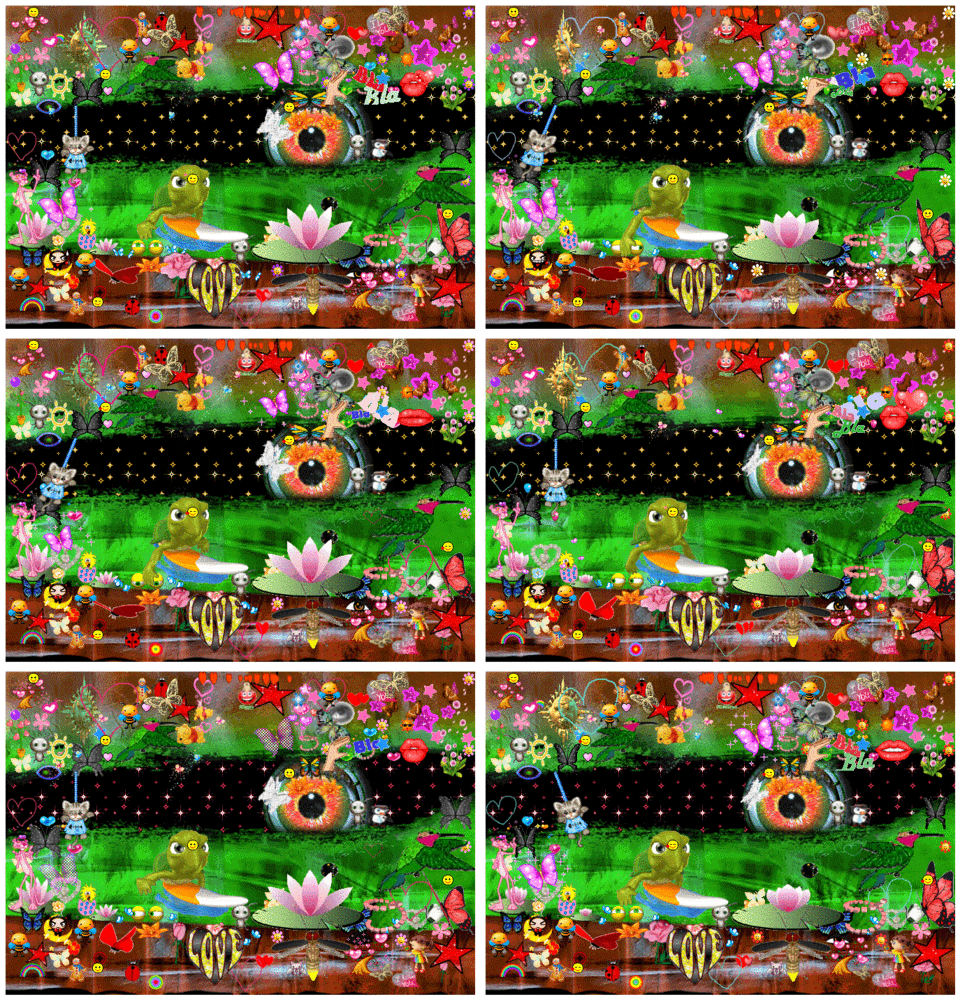
The spatial fragmentation is a visual mode that creates a close up view. The large 9, 1, 1 numbers are inserted and incorporated in the paintings' surface which creates an optical illusion, as during a film development, when images emerge from the background.
The left part of the triptych is No 9. This painting unites the number with a mob of demons who were brought together by a voodoo dance. The picture is willfully enigmatic but, at the same time, has a great power of not the phenomena it depicts, but rather the medium itself, an integration of the number with images visually.
An anomalous space relationship in the three parts creates magic experience of flame, water, and fall. The three parts of the "911" triptych are to be read as a unity from left to right. The layering juxtaposition of images spins the work in a dynamic movement.
"9" part exhibits a dance of spells when dark powers unfold the disaster. This left part of triptych with "9" reminds an arched gateway to Hell with the head devil situated diagonally from the top left corner towards the right foreground. This image is actually a large wooden mask with a huge white fang. A blue razor blade pierces its nose. The demon's eyes are rolled in from his exaltation of the weightless, ritual dance.
The artist disguises his personages of dark forces as monsters. For ages the Last Judgments on the walls of churches had made much of frightful and grandiose monsters. Jaisini applies the humorous overtone to a theme of supernatural. In the center of "9," there is a nude female demon with red, absent eyes and bulging tongue, which speak more of her own ecstasy than of terror.

The color of "9" is not of an infernal pit, but instead is a heated color of the African sun that liquefies air.
"1" with water shows "Flying Holland," a phantom-ship, a legendary sign of disaster for sailors. The ocean depths hold the remains of the shipwreck. Skulls and treasures suggest of the life's and earthly possessions' transience, "the memento mori" of a physical life. You may question the connection of the three pictures and find some interesting possibilities. What we have in "911" is not a universal course of events. It is an ordeal of one man, who stays behind his creation and is a survived prototype for his own judgment. Neither the beginning, nor the end of his tormented existence is constructed here, but the lesson of a legend is. To fulfill his concept, Jaisini uses the personages of Icarus who is a traditional image of an inventor. The portrayal of Icarus by Jaisini is a spiritual trial, the expression of delimitation that can happen of just-awakened and terrified consciousness of man. Creation brings the artists close to the destructive powers from beyond. Artists and inventors are familiar with this feeling of fall into abyss that can also be a moment of rise. Icarus is shown in the triptych separately from the treasure of the middle part (1 with water) as he is not a mediocre man who used to be the center of philosophical investigation as, for example in Bosch's "Death and the miser."
In Jaisini's "911" the Four Last Things, Death, Judgment, Hell, Heaven, turn out in an unusual way.

Icarus looks at the destination of his fall with a weak, last hope, just as the Bosch's dying miser-man, for a miracle. In Jaisini's version, no one passes the test of Last Judgment, except for Icarus. He represents the creative kind, whose legend never dies. He is the one mortal left to face his destiny, yet undecided, is it to be the rise, or the fall?
The "911" triptych creates a concept of a life cycle that does not stop, that blasts energy even through death. The work is a new poetic representation of the human dream to reach powers, which do not belong to the human nature. When the limits are being pushed to a critical point resulting in disaster, God is the one who is being called upon. In Jaisini's work, God is not rendered visually, but could be the painting's concept, a code of numbers for help, 9 1 1. The triptych has its aesthetic durability of a new confessional style.
Text Copyright: Yustas Kotz-Gottlieb ALL RIGHTS RESERVED New York 2003